You are about to discover Tennessee’s first official “Natural Area” located in the heart of Nashville, Tennessee. With over 1200 acres, Radnor Lake State Natural Area is the largest pocket of wilderness in the U.S. in close proximity to a major city. MORE
Radnor's caretakers remembered
Mrs. Mac, Carrie McElyea, was caretaker of Radnor Lake from 1946 to 1979. Karrie M. Shackleford shares memories of her convict-catching, gator-shooting grandmother.
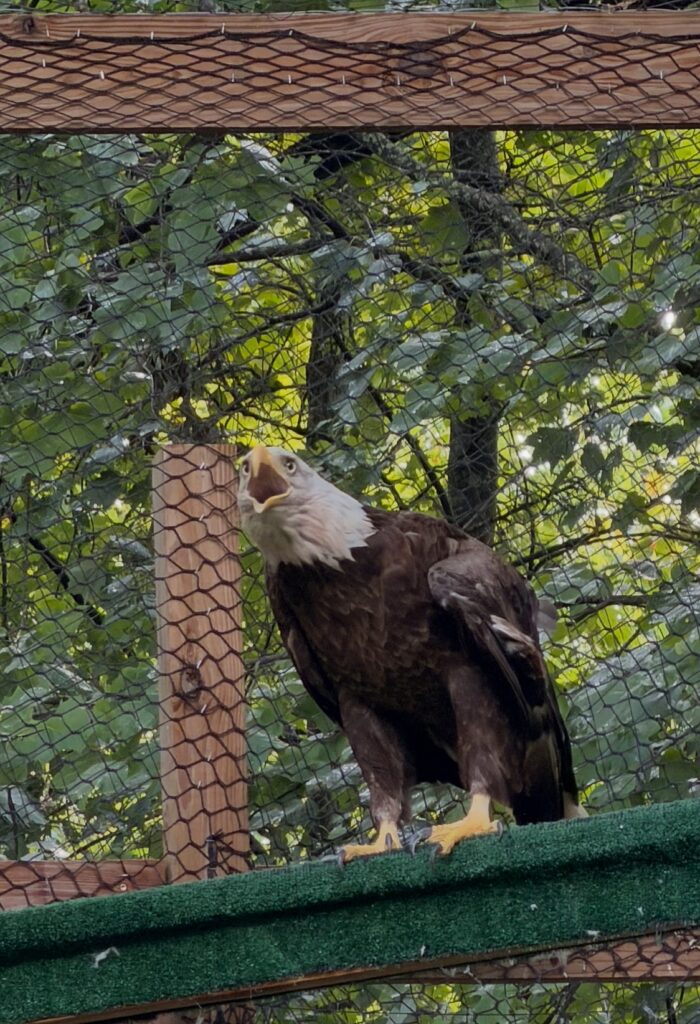
Three bald eagles were seen at Radnor this spring: two adults and one juvenile.Watch for them fishing in the lake, sunning in the branches of a dead tree, or flying majestically across the water. While the eagles are around Radnor Lake, canoe floats will be on hold since we don't want to threaten the possibility of their nesting at Radnor Lake!
August activities!
Mink, beaver, otters, owls, and butterflies. . . August programs take a look at Radnor's wildlife. Click here.
What is the green plant growing in the Lake?
Duckweed is commonly seen covering the surface of the Lake during the hot, summer months. A small, seed bearing plant, the green duckweed tends to grow in quiet, undisturbed bodies of water. This rapidly spreading plant is an important source of nutrients for waterfowl and deer, and it also absorbs excess nutrients and minerals in the water.
For information on the other plants in the lake, click here.
Please make a tax-deductible donation by clicking the image above. And when you renew your license tags at your local county clerkâs office, please purchase a Radnor Lake plate. Friends of Radnor Lake has received approximately $60,000 each year since 2003.